
Review · BUDAPEST
Budapest Christmas Market Tour with Basilica visit & Chimney cake
Christmas magic starts after dark. This Budapest Christmas market tour pairs three seasonal markets with St. Stephen’s Basilica, a chimney cake tasting, and an evening walk through central Budapest. I especially like the included Basilica visit and the way guides such as Katalin, Zsuzsa, István, and Vickie add local food tips and city history instead of simply pointing at market stalls.
I also like the small maximum of 14 people, which should make it easier to ask questions and stay with the guide. The main drawback is the crowded market area, especially around St. Stephen’s Basilica and Vörösmarty Square, where browsing can become slow and less relaxed during the busiest holiday evenings.
Key points to know before booking
- The tour begins at the Hungarian State Opera House at 4:30 pm, then follows Andrássy Avenue toward central Budapest.
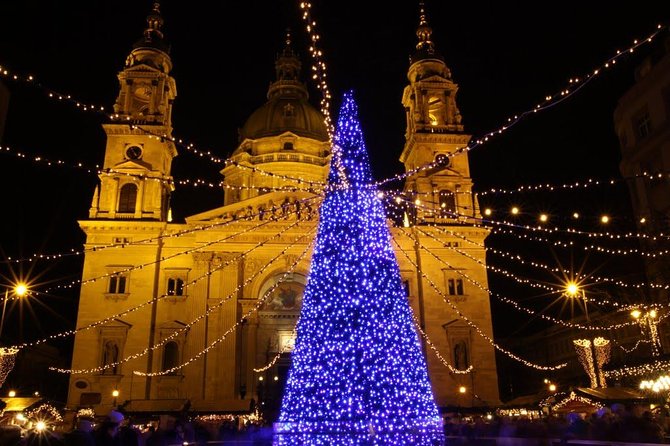
- St. Stephen’s Basilica is the main cultural stop, with an interior visit, nativity scene, and facade video-mapping show.
- Three Christmas markets are included, giving you more variety than visiting one square on your own.
- Food guidance is part of the experience, including chimney cake, mulled wine, hot tea, lángos, and other Hungarian treats.
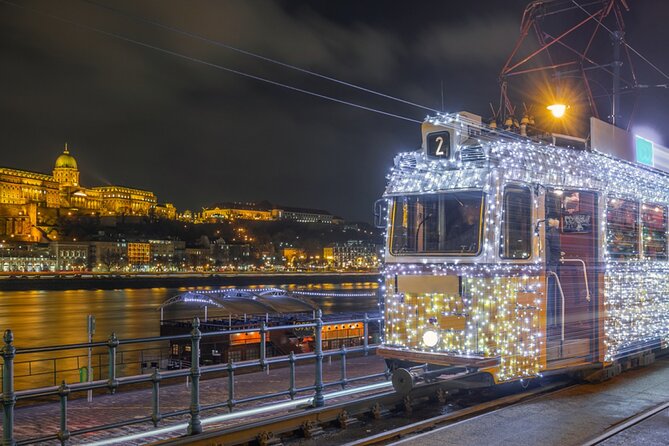
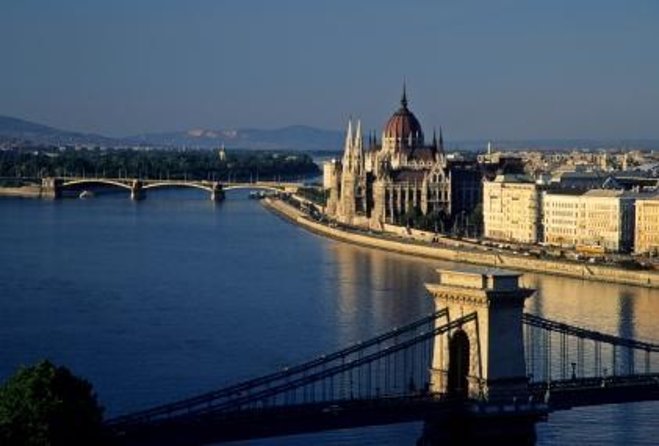
- The Danube promenade adds a scenic break, with illuminated Budapest views between market stops.
- The $140 price is easiest to justify if you value a guide, food advice, the Basilica admission, and a small group rather than simply market access.
Why this tour works well in Budapest after dark
Budapest’s Christmas markets are easy to find, but they are not always easy to understand. A stall may sell a traditional Hungarian snack beside a newer festival version. A gift may look local but come from somewhere else. A guide can help you sort through those choices while explaining what you are seeing.
That is the useful idea behind this 2-hour-30-minute tour. You are not only taken to decorated squares. You also get a short walking tour along Andrássy Avenue, an interior look at one of Budapest’s major churches, a Danube promenade walk, and practical advice about food and pastries.
The timing is sensible. Starting at 4:30 pm gives you some early evening light on the first part of the walk, followed by the market lights and the Basilica projection after dark. You get the city in two moods without committing an entire night to a formal sightseeing program.
The group is limited to 14 people. That is not a private tour, but it is small enough to feel more personal than a large coach outing. Guides have been praised for answering questions, adjusting to individual needs, and keeping the atmosphere friendly.
More Christmas Market Tours in the world:
- Christmas Markets Food Tour in Munich
★ 4.5 · 110 reviews - Dresden Christmas Market & Bastei Saxon Switzerland Tour from Prague
★ 5.0 · 105 reviews - Vienna: Christmas Markets Tour
★ 4.3 · 99 reviews
Meeting the guide at the Hungarian State Opera House
The tour begins on the entrance staircase of the Hungarian State Opera House at Andrássy út 22. This is a good starting point because the Opera House itself gives you an impressive first look at Budapest’s architecture, even though admission inside is not included.
From here, you walk down Andrássy Avenue. The route gives the guide a chance to point out buildings, statues, and city details before the market crowds take over. Vickie, one of the guides, was especially good at using this part of the walk to introduce other sights that you might otherwise pass without noticing.
You should arrive ready to walk outdoors for the full experience. The tour lasts about two and a half hours, and the path includes city streets, the inner-city promenade, and busy market areas. Comfortable shoes matter more than dressy footwear, even if you are in Budapest for a festive evening.
The Opera House meeting point is clear, but take care with the timing. The official start is 4:30 pm, and the tour ends at Deák Ferenc tér. That central ending point is useful for continuing your evening, catching public transport, or walking to another part of the city.
St. Stephen’s Basilica and the evening light show
St. Stephen’s Basilica is the strongest reason to choose this tour over a simple market stroll. It is described as the largest Roman Catholic church in Budapest, and the visit includes entry rather than only an exterior look.
Inside, your guide explains the church and its history, then points out the nativity scene. Katalin was praised for giving a detailed explanation of the Basilica, a welcome addition for anyone who enjoys history and architecture. The church visit gives the evening some depth before you return to the food stalls and holiday decorations.
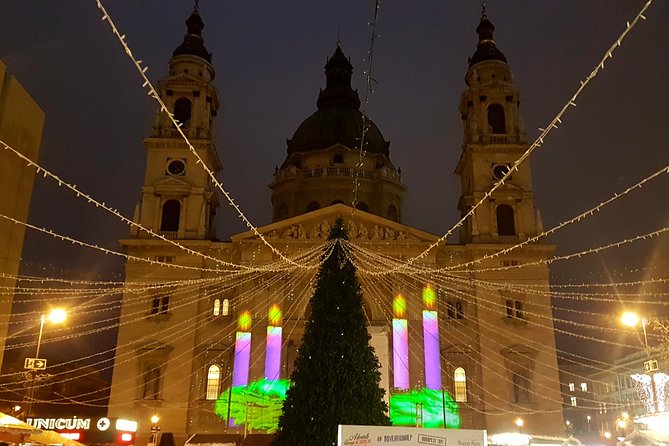
The facade video-mapping show is another highlight. Images are projected onto the front of the Basilica, turning the building into part of the Christmas display. It is a short, visual moment, but it adds much more atmosphere than ordinary decorative lights.
The drawback is crowding. The square around the Basilica can become very busy, and it may be hard to stop exactly where you want or move freely between stalls. A guide helps you keep track of the group, but no guide can make a packed holiday square feel quiet.
If you prefer to see the projection clearly, stay close to the guide and avoid wandering too far toward the food stalls before the show. The timing of the light display can also shape the rhythm of the tour, so this is not the point to split off for independent shopping.
Three Christmas markets, not just one square
The tour takes you through three different Christmas markets. That matters because each market can feel slightly different in layout, food selection, decorations, and shopping choices, even when the same holiday mood runs through all of them.
The largest market is at Vörösmarty Square, a central historic square surrounded by monuments and attractive architecture. It is a natural place for browsing gifts and souvenirs, but it is also likely to be the busiest stop. You may need patience if you want to study the stalls or take photographs.
The market near St. Stephen’s Basilica is especially memorable because the church forms such a dramatic backdrop. The video-mapping show adds another reason to stay, and the surrounding stalls make it easy to combine sightseeing with a snack.
The third market gives the tour a useful change of pace. The supplied details do not identify it by name, so you should not expect a fixed list of named markets in the tour description. What you can expect is a route through three festive market areas rather than one brief stop.
I like this structure because it prevents the evening from becoming a single square and a single food purchase. You see more of central Budapest and get a better sense of how the city presents Christmas to locals and visitors.
Still, you should not book this expecting a long shopping session at every market. The tour has to keep moving, and two and a half hours is not enough for leisurely browsing at three locations, a church visit, food tastings, and a Danube walk. Think of it as an introduction with guided sampling.
A few more festive outings around the world worth booking
- Prague: Advent Boat Cruise with Sweets and Hot Drinks
★ 3.9 · 18 reviews - Budapest Wonderland – A Christmas Market Tour with Chimney Cake & Mulled Wine
★ 5.0 · 15 reviews - Private Budapest Christmas Market Tour with Chimney Cake & Mulled Wine
★ 5.0 · 6 reviews - NYC: Christmas Holiday Guided Walking Tour with Dessert
★ 4.5 · 4 reviews
What to eat: chimney cake, lángos, and warm drinks
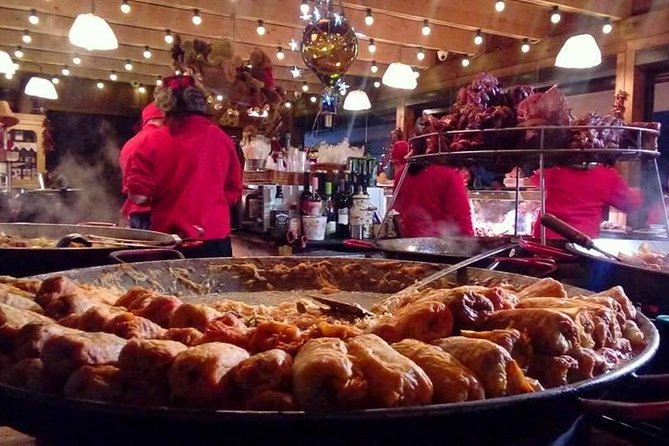
Food is handled in a practical way. You get to sample traditional Hungarian Christmas foods and drinks, including chimney cake, mulled wine, and hot tea. Some guides also introduce lángos and explain which items are made in a traditional or classic style.
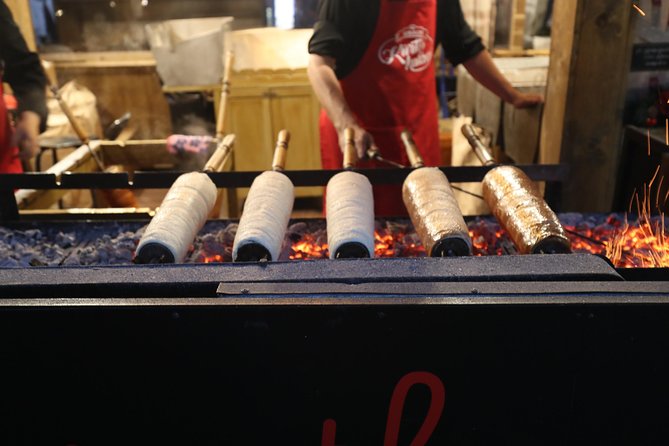
Chimney cake is the signature treat here. It is a long, spiral-shaped pastry cooked around a cylinder, then finished with toppings. The name comes from its hollow shape and the way steam rises from the warm pastry. The tour includes a taste, so you can try it without committing to a large market purchase.
Zsuzsa was praised for explaining which foods were traditional and which followed a more classic market style. That kind of advice is valuable because market food can look familiar while varying a great deal in quality and preparation.
Mulled wine and hot tea are also part of the experience. On a cold night, the warm drink is not a minor detail. It gives you a chance to pause, warm your hands, and continue the walk more comfortably. The tour is not presented as a full dinner, though, so you should plan another meal if you need something substantial.
Lángos may be introduced as one of the local street foods. It is a fried dough dish often served with savory toppings, and it is one of the foods you may want to try elsewhere if you like filling market snacks. The guide’s advice helps you decide what deserves your appetite and what is better left for later.
The best approach is to arrive hungry enough for samples but not so hungry that you expect the tastings to replace dinner.
Walking beside the Danube with Budapest lit up
Between market stops, the route reaches the inner-city promenade along the Danube. This section gives the evening a welcome pause from crowds, music, food stalls, and shopping.
The main reward is the view of illuminated Budapest. The riverfront lets you look across the water and take in the city lights from a more open setting. It is also a useful chance to hear about nearby sights and statues, which guides have included in their explanations during the walk.
I like this part because it connects the markets to the city itself. Without the Danube walk, the experience could feel like a chain of decorated squares. The riverfront reminds you that Christmas is only one layer of Budapest, not the whole city.
There is also a practical tradeoff. A riverside walk in winter can feel cold, especially after sunset. Wear a warm coat, gloves, and shoes suited to walking. The tour does not mention transportation between stops, so you should assume the route is done on foot.
What the guides add to the evening
The guide can make or break a market tour, and the named guides receive strong praise for more than basic directions. Katalin is described as gracious and flexible, including handling a ticket problem without fuss. She also has a history background and gave a detailed Basilica explanation.
Zsuzsa combines food advice with local sightseeing. She can point you toward pastries, explain market traditions, and identify a section of the road associated with winning Hungarian Wine of the Year selections. That is the sort of small detail you are unlikely to get from a market map.
István has been praised for being informative, inviting questions, and showing interesting sights between markets. Vickie helped explain food and gifts while adding information about the Opera House and other city landmarks.
The company is Budapest Wonderguides. The tour is offered in English, and the group size is capped at 14 people. Most people can participate, and service animals are allowed. The experience is near public transportation, though no transport ride is listed as part of the tour.
Guide quality can vary from one departure to another, but the recurring pattern here is clear: the best part is not simply being led from square to square. It is getting help with context, local customs, and food choices.
Is $140 a fair price?
At $140 per person, this is not the cheapest way to see Budapest’s Christmas markets. You can walk through public market areas without paying for entry. If you are confident navigating central Budapest and mainly want to shop, the price may feel high.
The value improves if you would otherwise pay separately for several things: a private or small-group walking guide, a church visit, food guidance, tastings, and an organized evening route. St. Stephen’s Basilica admission is included, and the tour combines it with three markets and the Danube promenade.
You are also paying for saved time. A guide can lead you from the Opera House to the markets without requiring you to plan a route, identify the best stops, or decide which foods are worth trying. That convenience matters on a short Budapest visit.
I would book it if you want structure, history, and food advice in one evening. I would skip it if your main goal is unhurried shopping, repeated food stops, or keeping costs as low as possible.
Who should book this Christmas market walk?
This tour suits a first visit to Budapest, especially if you have limited time and want a clear introduction to the central city. It also works well for people who prefer a guide to explain food, buildings, statues, and local traditions along the way.
History and architecture fans should value the Basilica visit. Food-focused visitors will appreciate the chimney cake, hot drinks, lángos advice, and tips about pastries and wine. Couples and small groups may enjoy the lights and riverfront walk without needing to organize the evening themselves.
It may be less suitable for anyone who dislikes crowds or needs a great deal of time at each stall. The markets can become extremely busy, and the fixed route means you cannot spend the whole evening at one favorite stand.
The tour receives a 4.9 rating from 18 ratings, with all recommending it. That is a small sample, but it matches the strongest features of the experience: friendly guides, the Basilica, the light show, useful food tips, and a good mix of markets and city sights.
My verdict on the Budapest Christmas Market Tour
I would book this tour when I wanted more than a quick look at decorated stalls. The Basilica admission, video-mapping show, Danube walk, and three-market route give the evening a useful shape, while the guides add the local detail that turns snacks into part of the culture.
The main caution is the $140 cost and the possibility of heavy crowds. You are paying for guidance and context, not exclusive access or a private market experience.
Choose it if you want a friendly English-language introduction to Budapest’s Christmas season, with history and food woven into a compact evening. Skip it if you are happy exploring on your own and would rather spend that money on market purchases.
FAQ
How long does the Budapest Christmas market tour last?
The tour lasts approximately 2 hours and 30 minutes.
What time does the tour start?
The tour starts at 4:30 pm.
Where does the tour begin?
The meeting point is at the entrance staircase of the Hungarian State Opera House, Budapest, Andrássy út 22, 1061 Hungary.
Where does the tour end?
The tour ends at Deák Ferenc tér in Budapest.
Is St. Stephen’s Basilica admission included?
Yes. Admission to St. Stephen’s Basilica is included, along with a look at the nativity scene and the facade video-mapping show.
How many people can join the tour?
The tour has a maximum group size of 14 people.
Is the tour offered in English?
Yes. The experience is offered in English and includes a mobile ticket.
Can I cancel for a full refund?
Yes. You can cancel up to 24 hours before the experience start time for a full refund. Cancellations or changes made less than 24 hours before the start time are not accepted for a refund.
New this season around the world
- Washington, DC: Christmas Tree & Holiday Lights Bus Tour★ 4.5 · 4 reviews
- Windsor, Bath, Stonehenge & Salisbury with Christmas Lunch★ 4.3 · 3 reviews
- Wroclaw: Private 1h Christmas River Cruise★ 5.0 · 2 reviews
- Wien: Tour with locals on the trails of the Christmas Tree★ 4.6 · 7 reviews
- Visit the authentic Christmas market in Obernai★ 3.0 · 3 reviews
- Washington DC: Christmas Eve Gourmet Brunch or Dinner Cruise★ 4.2 · 6 reviews
- Vienna: Festive Season and New Year’s Eve Waltz Workshop★ 5.0 · 3 reviews
- Zurich’s Enchanted Christmas: A Festive Journey★ 4.5 · 3 reviews
Christmas Market Tours, compared.
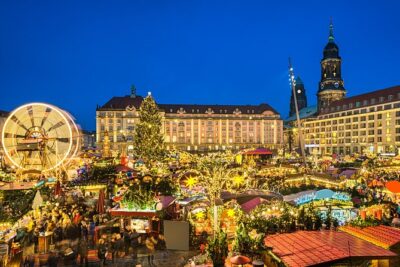
Dresden Christmas Market & Bastei Saxon Switzerland Tour from Prague
Read our review →
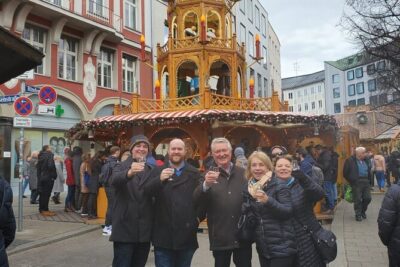
Original Munich Christmas Market Tour with Festive Wine and Food
Read our review →
Christmas Lights and Markets Guided Walking Tour with Mulled Wine
Read our review →
Tour 3 Magical Prague Markets with Locals, Christmas Goodies incl
Read our review →
Munich Christmas Market Food Tour with Tastings
Read our review →Browse the lists this tour appears in