
Review · UK
Christmas Guided Walking Tour in York
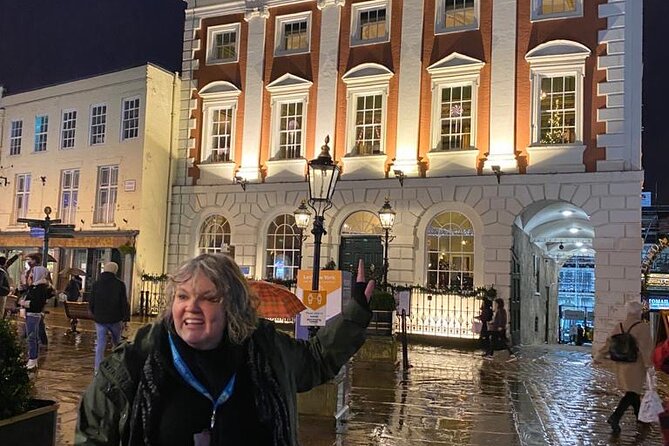
Christmas history gets wonderfully strange in York. This 90-minute evening walk links York Minster, Roman Saturnalia, Viking midwinter customs, medieval feasts, chocolate, mistletoe, and Charles Dickens. I like the clear historical thread connecting old customs to Christmas today, and I like the small-group format, listed for up to 15 people in the tour highlights. The main consideration is the weather: a dry, frosty evening can feel magical, but York’s cold streets call for warm clothes and sensible shoes.
The walk costs $17.36 per person and begins at 4:00 pm in Minster Yard, ending at the Christmas Market on Parliament Street. Sarah has led many of these walks with an upbeat, easy-to-follow style, though another session was led by Michelle, so your guide may vary. The practical wrinkle is that the advertised group limit is inconsistent: one section says 15 people, while the additional information says 25. Either way, it is a far more personal way to see York than a large coach tour.
Key points to know before booking
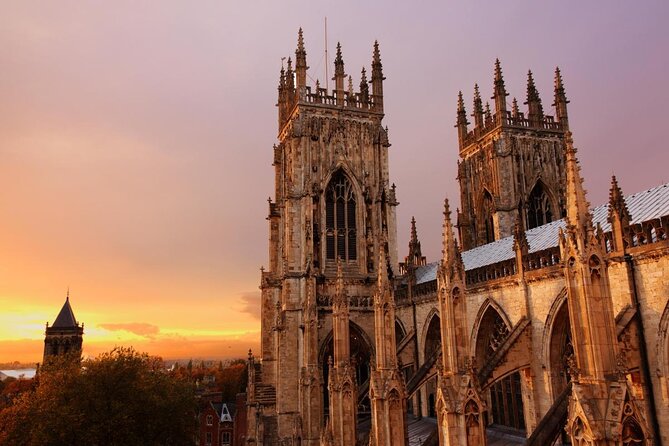
- York Minster begins the story: You look at the cathedral, its altar, and the Christmas celebrations associated with the site across roughly 1,500 years.
- The route connects many cultures: Roman Saturnalia, Viking midwinter customs, pagan traditions, medieval practices, and Victorian Christmas all have a place.
- Charles Dickens gets his due: The walk explains how a Victorian author helped shape the Christmas many people recognize today.
- The tour ends at the Christmas Market: Parliament Street is a useful finish if you want to continue with lights, stalls, and seasonal shopping.
- It is short but content-heavy: The walk lasts about 90 minutes, so expect a brisk sequence of stories rather than long visits inside attractions.
- The price is modest: At $17.36, the cost is reasonable if you enjoy guided history and want context for York’s festive streets.
Starting beneath York Minster at 4:00 pm
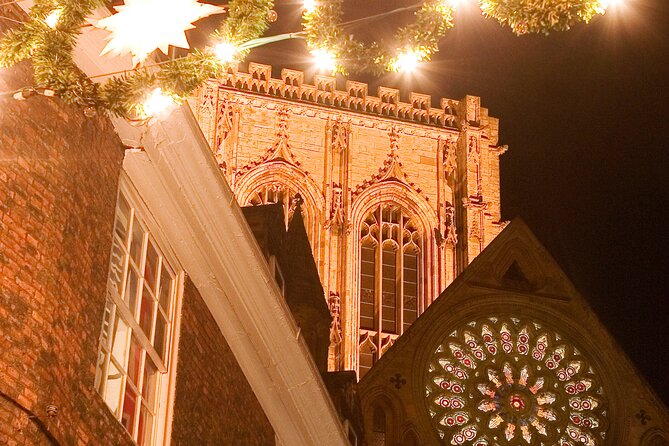
The tour starts at Constantine the Great in Minster Yard, beside York Minster. This is an excellent place to begin because the cathedral gives the walk an immediate sense of scale. You are not starting with a generic meeting point or a distant transport stop. You begin beside one of York’s defining buildings.
The opening section asks whether the first Christmas Festival took place here in 521 AD and explores what is on the altar at York Minster. The wording matters: this is presented as a historical question for the guide to unpack, not as a simple fact to accept without thought. The story then broadens to the Christmas festivals associated with this part of York over the last 1,500 years.
I like this opening because it places Christmas in a real setting. You are standing in the shadow of a Gothic cathedral while hearing how religious ceremony, local custom, and public celebration changed over time. The tour does not treat Christmas as a single invention. Instead, it shows how customs gathered layers across centuries.
There is one limitation. Since the walk is outdoors and the route passes by the Minster rather than promising an interior visit, you should not book it expecting a cathedral tour. The value here is the setting and the explanation, not extended time inside the building.
More Christmas Walking Tours in the UK
- London: Tootbus Christmas Lights Tour incl walking tours
★ 3.6 · 227 reviews - Christmas Lights and Markets Guided Walking Tour with Mulled Wine
★ 5.0 · 72 reviews - London Christmas Carol & Charles Dickens Small Group Walking Tour
★ 5.0 · 54 reviews
Theatre Royal and the Victorian Christmas
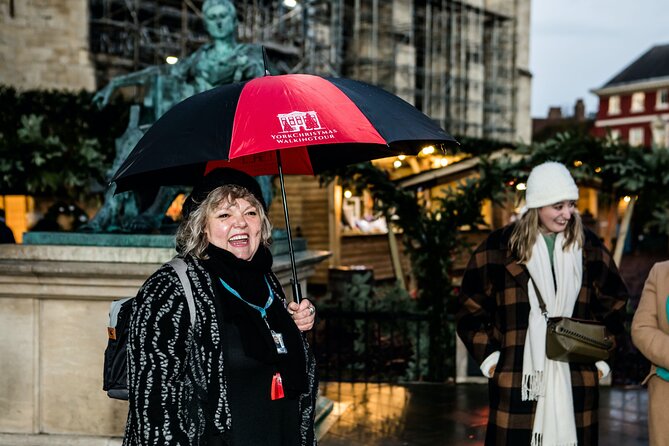
From the Minster area, the walk passes the Theatre Royal and moves toward another historic cultural venue. This section introduces the Victorian author who helped create Christmas as modern audiences know it. The accompanying comments make clear that Charles Dickens is part of this story.
Dickens is an especially useful figure for this tour because he helps connect older traditions with familiar modern ideas of Christmas. The story is not limited to church history or medieval custom. It also considers literature, public sentiment, family celebrations, generosity, and the way popular writing can shape a holiday.
This part should appeal to you if you like cultural history rather than only architectural facts. The Theatre Royal adds a useful setting too. York’s Christmas story is not just about religious buildings and old markets. It also involves performance, storytelling, books, and public entertainment.
The guide’s delivery makes a difference here. Sarah is praised for speaking clearly, keeping the pace lively, and holding attention for the full 90 minutes. That is important on a walking tour packed with dates and traditions. The information needs to be told as a connected story, not delivered as a list of facts.
York as a chocolate city
The tour then brings chocolate into the Christmas story. York is presented as a chocolate city, and the walk links this York-born treat with the festive season.
This is a lighter section, but it gives the tour some local flavor. You are not only hearing about customs imported from Rome, Scandinavia, or Victorian Britain. You are also getting a specifically York connection. Chocolate makes sense as a Christmas subject because seasonal food and gifts are part of how people experience the holiday.
The itinerary does not promise a tasting, shop visit, or chocolate-making demonstration, so do not book this expecting a food tour. The chocolate element is part of the spoken history. Still, it is a welcome change of pace after the cathedral and literary material.
I also like the balance here. A tour made up entirely of religion and ancient ritual could feel heavy. Chocolate gives the guide a chance to bring the story back to York’s identity and to the pleasure of Christmas itself.
Lights, shopping, and medieval Christmas customs
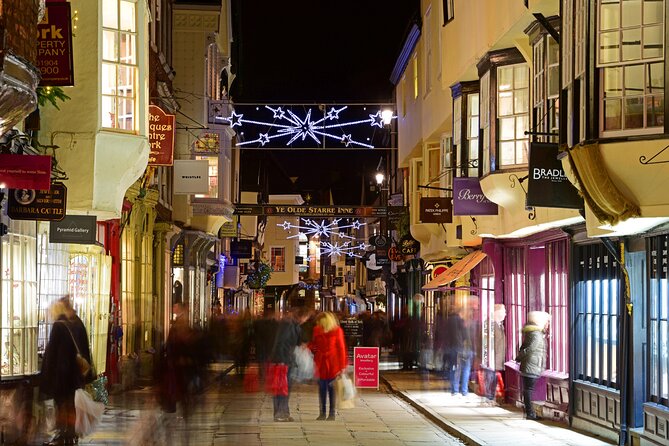
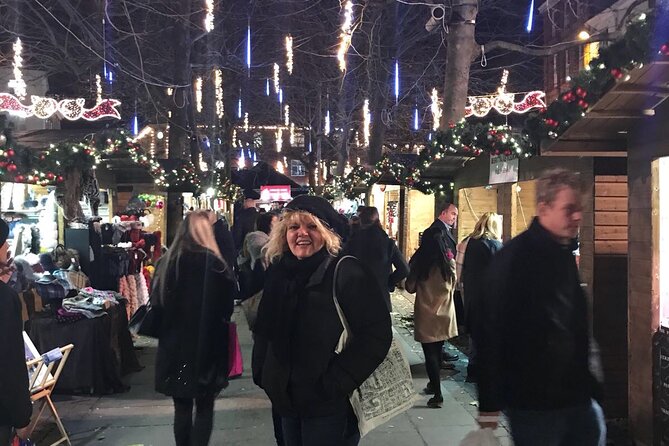
As daylight fades, the route passes York’s Christmas lights and explores medieval Christmas traditions and the shopping of Christmas past. This is likely to be one of the most atmospheric stretches because the tour takes place at 4:00 pm, when winter darkness should already be settling in during the Christmas season.
The lights are not just decoration in this walk. They help create the mood while the guide explains how people celebrated and shopped in earlier periods. You get a useful contrast between modern seasonal commerce and older forms of festive exchange.
The medieval material also keeps the walk grounded in York. You are moving through streets that have long been associated with trade and public life, while hearing how Christmas operated before today’s cards, shops, packaged gifts, and modern advertising.
The route passes by Shambles Market, one of the named sights. The itinerary does not describe a stop for shopping or a dedicated market tasting, so your focus remains on the guide’s stories. The ending at Parliament Street, however, puts you in the heart of the Christmas Market, which gives you a natural chance to continue the evening on your own.
Same town, a different sort of December evening:
- London: Christmas Lights Bus Tour With Live Guide
★ 4.0 · 5,410 reviews - London by Night Bus Tour with Christmas Lights and Live Guide
★ 4.5 · 2,040 reviews - London Christmas Lights Tour by Vintage Bus Open Top
★ 4.0 · 1,132 reviews - London: Christmas Lights Tour by Vintage Bus
★ 4.0 · 770 reviews
Roman Saturnalia and the older roots of Christmas
One of the most interesting sections asks what happened at Saturnalia, the Roman December festival, and what modern celebrations took from it. This is a good example of the tour’s main idea: Christmas traditions come from several periods and cultures rather than one neat source.
The Roman material adds depth to familiar habits. Festive meals, social celebration, seasonal merriment, and the timing of winter customs all become part of a wider discussion. The walk does not reduce Christmas to a simple Roman replacement story. Instead, it asks you to consider how traditions can change meaning as they move from one age to another.
This is also where the guide’s ability to explain connections clearly matters most. Roman festivals, medieval customs, and modern Christmas can become confusing if they are presented too quickly. The strong reactions to Sarah’s explanations suggest that the material is handled in an accessible way, with humor and energy rather than academic dryness.
If you already know a lot about Roman religion, this part may feel introductory. For most people, though, it should offer a useful framework for understanding why some Christmas habits feel older than the holiday’s modern form.
Mistletoe, fruitcake, and surprising festive habits
The walk then turns to two familiar but unusual customs: kissing under mistletoe and eating fruitcake with cheese. These details give the tour a more personal feel because they involve things you may have seen or eaten during Christmas without knowing where they came from.
The mistletoe discussion is particularly well suited to a walking tour. It is a custom you can recognize immediately, yet its meaning is not obvious. The fruitcake and cheese pairing is more unexpected and adds a bit of humor. A good guide can use these details to make the past feel close rather than remote.
This part also helps families and mixed-age groups. Children may not care much about dates connected to Roman festivals, but questions about mistletoe, cake, and strange food combinations can bring them back into the conversation.
Do not expect a food sample or a formal demonstration. These are stories and explanations along the route. The attraction is the oddness of the customs and the way they show that Christmas has always included habits people follow because they are familiar, symbolic, or simply enjoyable.
Viking midwinter traditions before the Christmas Market
The final major theme is the Viking midwinter solstice. The guide explores what Viking celebrations contributed to traditional Christmas, bringing the tour back to York’s strong Scandinavian connection.
This is one of the best subjects for York. The city’s Viking past is already a major part of its identity, and linking that past to midwinter traditions gives the Christmas walk a clear local focus. You are not hearing a general lecture on Vikings detached from the place around you. The subject is tied to York and to the winter customs still associated with Christmas.
The Viking section also rounds out the tour’s timeline. You have moved from Roman December festivals to medieval shopping, Victorian literature, and modern seasonal lights. The Viking material fills an important part of that journey and shows that the Christmas season developed through many layers.
By this point, the tour has covered a lot in a short time. That is a strength if you enjoy variety, but it can also be the main drawback. You will hear many names, periods, and traditions in 90 minutes. If you prefer a slow architectural walk with long pauses at each sight, this experience may feel fast.
Ending at Parliament Street’s Christmas Market
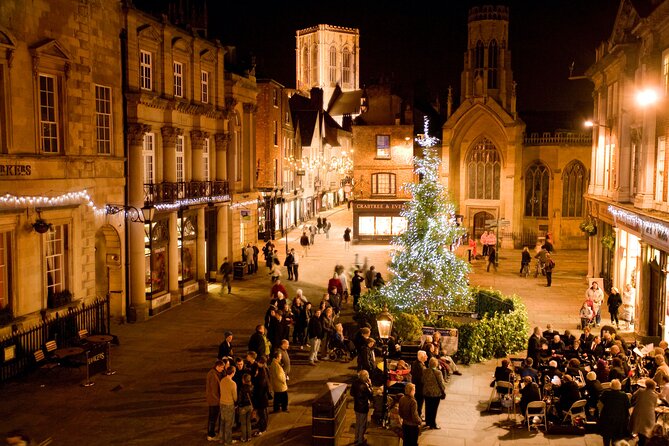
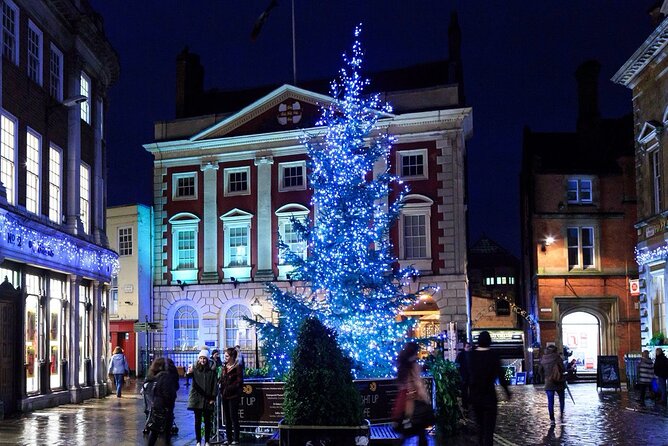
The walk ends on Parliament Street, in the heart of York’s Christmas Market. This is a practical finish. You do not end in an isolated part of the city or need to retrace the route to find the festive center.
The ending also gives the tour a satisfying link between past and present. You have heard about medieval shopping and seasonal customs, then finish among modern Christmas stalls and lights. The guide provides the historical context, and you can decide how long to stay afterward.
Because the tour is scheduled for the early evening, this final location is well chosen for anyone who wants to continue with food, shopping, or a look at the decorations. The walk itself does not promise time to browse the market as part of the guided experience, so keep that separate from the 90-minute tour.
I would consider taking this walk near the start of a York stay. It can help you notice details on later walks and gives the city’s Christmas displays more meaning. One person found that taking it on the first night shaped the following three days in York, and that timing makes good sense.
Guide style, group size, and walking comfort
The guide is central to the experience. Sarah is repeatedly described as friendly, enthusiastic, clear, and easy to listen to. She is also praised for pointing out things that even repeat visitors had never noticed. That suggests the walk depends as much on observation and storytelling as on set historical information.
Another session was led by Michelle, who was described as fun and engaging. Since the guide can vary, you should think of those names as examples rather than a promise that Sarah will lead your date.
The tour is offered in English and uses a mobile ticket. It lasts about 1 hour 30 minutes and is listed as a small-group experience. The highlights specify a maximum of 15 people, while the additional details give a maximum of 25. I would check the current booking information if group size is important to you.
Most people can participate, and service animals are allowed. The tour is near public transportation, though no specific bus or rail instructions are provided. Since it is a city walking route, comfortable shoes are sensible. Warm layers are even more important. The tour is designed for a cold-season evening, and one especially positive account still noted how cold the walk was.
Is $17.36 good value?
At $17.36 per person, the tour is fairly priced for a 90-minute guided walk in central York. You are paying for a live guide, a planned route, and a connected story that covers Roman, Viking, medieval, and Victorian material.
The value is strongest if you would otherwise walk through York’s Christmas streets without understanding the customs behind them. It is also good value if you enjoy a guide who adds local detail, humor, and historical links to familiar sights.
The price is less compelling if you want entry to York Minster, a food tasting, a private tour, or a long stop at each attraction. None of those are promised. This is an outdoor storytelling walk, not an attraction ticket or a full sightseeing tour.
The five-star response is unusually consistent, with 100 percent recommending the experience and 106 ratings shown at the time of the supplied information. The most praised elements are the guides’ enthusiasm, the clear delivery, the unusual Christmas facts, and the way the walk makes York’s history feel relevant to present-day celebrations.
Who should book this Christmas walk?
I would recommend it to first-time visitors who want an easy introduction to York at Christmas. It also suits repeat visitors, since one guide has been praised for noticing details that longtime York visitors had missed.
Families may enjoy the mix of Romans, Vikings, chocolate, mistletoe, Dickens, and Christmas lights. History fans will get the most from the connections between different periods, while casual visitors can simply enjoy the stories and the festive setting.
You may want to skip it if you dislike outdoor walking in cold weather or prefer a tightly focused tour about one building. The amount of information is a strength for curious minds, but it may feel quick if you want long stretches for photographs or quiet sightseeing.
Book it if you want York’s Christmas atmosphere explained rather than simply displayed. For a modest price, you get a lively introduction to the customs behind the season and a convenient finish at the city’s Christmas Market.
FAQ
Where does the Christmas Guided Walking Tour in York start?
It starts at Constantine the Great, 4 Minster Yard, York YO1 7JB, beside York Minster.
What time does the tour begin?
The stated start time is 4:00 pm.
Where does the tour end?
It ends on Parliament Street, York YO1, in the heart of the Christmas Market.
How long does the walking tour last?
The experience lasts approximately 1 hour and 30 minutes.
What language is the tour offered in?
The tour is offered in English.
How many people can join the tour?
The highlights state a maximum of 15 people, while the additional information states a maximum of 25. Check the current booking details if this matters to you.
Can I cancel for a full refund?
Yes. You can cancel at least 24 hours before the local start time for a full refund. Cancellations or changes made less than 24 hours before the start time are not accepted for a refund.
New this season around the UK
- Windsor, Bath, Stonehenge & Salisbury with Christmas Lunch★ 4.3 · 3 reviews
- Private York Christmas Walking Tour★ 5.0 · 7 reviews
- moviESCAPE Stockport Santa’s Express Christmas Escape Room Game★ 5.0 · 4 reviews
- Vintage Top Deck London Christmas Lights Tour★ 3.5 · 4 reviews
- Salisbury, Stonehenge, Bath and Windsor with Christmas Lunch★ 3.5 · 7 reviews
- London Sights and Sounds on Christmas Day Afternoon Guided Tour★ 4.5 · 4 reviews
- London: Christmas Market Tours in Salisbury and Winchester★ 4.5 · 2 reviews
- Private Christmas Lights Tour London★ 5.0 · 2 reviews
Christmas Walking Tours, compared.
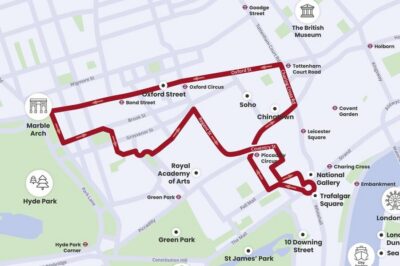
London: Tootbus Christmas Lights Tour incl walking tours
Read our review →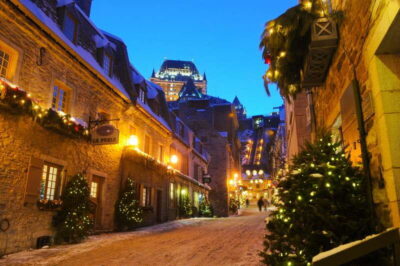
Quebec City: Christmas Magic Walking Tour in Old Quebec
Read our review →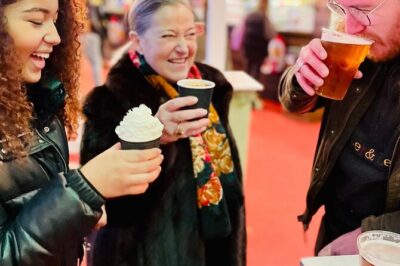
Christmas Lights and Markets Guided Walking Tour with Mulled Wine
Read our review →
New York Christmas Holiday Small-Group Walking Tour
Read our review →
Chicago-Style Holiday Hike: Festive Food and Walking Tour
Read our review →
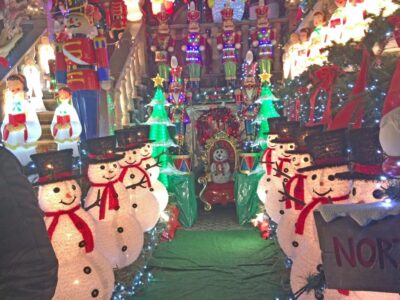
Brooklyn Christmas Lights Walking Tour at Dyker Heights
Read our review →
Freiburg: Christmas Drag Show Walk with Betty BBQ
Read our review →Browse the lists this tour appears in