
Review · BELGIUM
From Ypres, The Christmas Truce to Passchendaele Ypres Based WW1 private tour
The fields around Ypres still tell their stories. This eight-hour private tour links the Christmas Truce, Messines Ridge, Passchendaele, Hill 60, Tyne Cot Cemetery, and the Menin Gate with a guide who adds the human detail missing from many battlefield visits. I especially like the custom route and the chance to connect the sites with your own family history. I also like that pickup, bottled water, and the trench museum are included. The main drawback is that this is a full day of serious military history, with limited time for a relaxed lunch.
The guide, Søren, has lived around Ypres for 15 years and brings a personal connection to the area. He is from London, speaks English, and has researched family members for past visitors. That personal attention is a major part of the appeal, but the tour requires at least two people and starts only from Ieper, also called Ypres.
I would choose this tour if you want context, not just photographs. You will cover a lot of ground by vehicle, but you will also walk through woods, cemeteries, trenches, and former battle positions. This is a history-heavy day, best suited to anyone willing to slow down and listen.
Key Points Before You Book
- Christmas Truce and Messines Ridge: Spend about two hours exploring mine craters, the 1914 truce area, and the site where Adolf Hitler was treated for wounds.
- Australian battle history: Follow the Australian advance through Hooge, Polygon Wood, Broodseinde, Zonnebeke, and Passchendaele-related sites.
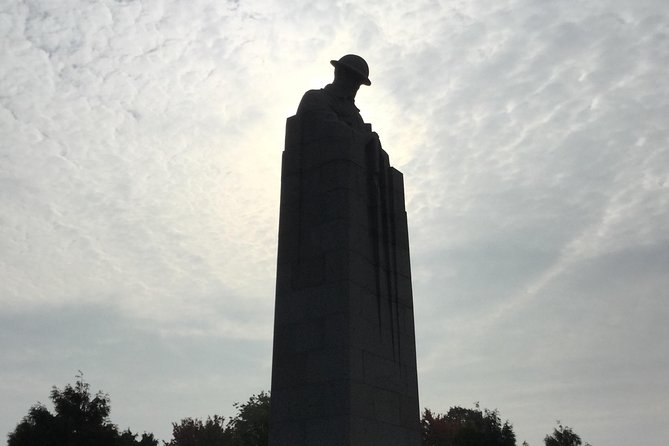
- Major memorials: Visit Tyne Cot Cemetery, the Menin Gate, and the John McCrae site at a thoughtful pace.
- Private and adjustable: Your group travels alone, and Søren can shape the day around your knowledge, nationality, or family connections.
- Original trench museum: Sanctuary Wood includes preserved WWI trenches and a small museum, with admission included.
- Plan for lunch: Food is not included, so ask about the day’s timing before setting off.
Why a Private Ypres Battlefield Tour Helps
The Ypres Salient is not a single battlefield with clear signs pointing from one event to the next. Modern roads, farms, villages, and rebuilt towns cover much of the old front. Without a guide, you can easily visit the famous names and miss how the ground fits together.
This tour works because the stops are connected by the story of the fighting. You move along the Australian advance, from Messines and Hill 60 toward Polygon Wood, Broodseinde, Zonnebeke, and Passchendaele. The drive between stops is not wasted time. It helps you understand direction, distance, and the way one attack led to another.
A private setting also changes the pace. If you already know the broad outline of the First World War, Søren can focus on people, units, and local details. If the subject is new to you, he can explain the basics without making you feel lost. Previous visitors with Australian, South African, and British family connections received extra research into relatives, including help locating graves and finding further books, films, and podcasts.
That is a real advantage over a large coach tour. You can ask a question at the exact moment it occurs to you, and you do not have to follow a fixed script. The tradeoff is price. At $420.49 per person, the tour costs much more than a group excursion. For two people, the basic total is about $840.98, before lunch. I think the price makes the most sense for families, small groups, or anyone tracing a relative who fought in the Ypres area.
More Private Christmas Tours in the world:
- New York City Christmas Lights Private Horse Carriage Ride
★ 4.5 · 237 reviews - Christmas Lights Tour of Madrid in Eco Tuk Tuk Private
★ 5.0 · 125 reviews - Christmas in New York: Private Holiday History Tour
★ 5.0 · 107 reviews
Messines Ridge and the Christmas Truce
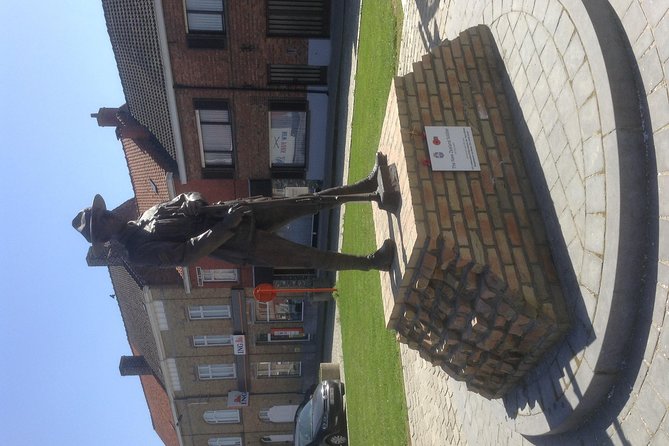
Messines Ridge receives about two hours, making it the longest stop of the day. That extra time matters. This is where you hear about the Battle of Messines, see mine craters, and visit the area associated with the Christmas Truce.
The truce story is often reduced to a cheerful tale of soldiers playing football. The fuller setting is more complicated, and a local guide can explain how the event fitted into life along the front. The tour also includes the crypt where Adolf Hitler was treated for wounds. That detail adds a surprising and uncomfortable layer to the site, particularly when you consider how later events changed the meaning of this part of Belgium.
The mine craters are among the most striking physical reminders of the war. They show the scale of underground warfare and the force used to break the German positions. I would give this stop your full attention, because it provides the clearest opening lesson in how the Ypres battles were fought.
Messines is also a good place to ask about terrain. The ridge was important because high ground offered observation and control. You will get more from the visit if you pay attention to the relationship between the ridge, roads, villages, and fields rather than treating the crater as an isolated attraction.
Hooge Crater Cemetery and the Menin Road
The stop at Hooge Crater Cemetery lasts about 15 minutes, so expect a focused visit rather than a long walk among the graves. You will hear about Pat Bugden VC, a 20-year-old Australian recipient of the Victoria Cross, and stand on the Menin Road near the former Australian gun pits used during the assault toward Passchendaele.
This is a useful example of how the tour mixes individual stories with military movement. A cemetery can feel abstract when you see row after row of headstones. Learning about a young soldier by name gives the place a human scale.
The short stop may feel rushed if you want time to read many headstones. I would have a particular name ready before the tour if your family connection is part of the reason for booking. The private format gives you a better chance of asking about it, but the day still has many stops to cover.
The Black Watch and Earlier Fighting
At The Black Watch site, Søren explains the ground used by the Australian headquarters in September 1917 and earlier actions from November 1914. This connection between different years is important. The same patch of earth could serve one purpose in one battle and a completely different purpose later.
The stop is less about a major monument and more about understanding continuity. The Ypres area saw repeated fighting, so a location could be occupied, shelled, abandoned, and used again. I like this kind of explanation because it corrects the common idea that each battle happened on a separate, neatly marked field.
No duration is listed for this stop, which means the exact timing may depend on your interests and the day’s pace. If you want a detailed account of the 1914 actions, tell Søren early. The tour is advertised as customizable, and specific questions are likely to make this stop more rewarding.
A few more festive outings around the world worth booking
- London: Christmas Lights Bus Tour With Live Guide
★ 4.0 · 5,410 reviews - London by Night Bus Tour with Christmas Lights and Live Guide
★ 4.5 · 2,040 reviews - Auckland: Hobbiton Movie Set Day Trip with Festive Lunch
★ 4.8 · 1,431 reviews - Paris: Tootbus Open-Top Christmas Bus Tour
★ 4.0 · 1,365 reviews
Polygon Wood, Bunkers, and the Australian Fifth Division
Polygon Wood includes a walk through the trees, visits to concrete bunkers, a cemetery, and the Australian 5th Division monument. The listed visit lasts about 30 minutes.
This is one of the more physical parts of the day, though the tour is generally suitable for most people. You are not simply looking at a memorial from a roadside pull-in. You are walking through an area where surviving concrete structures help show how soldiers sheltered and defended positions.
The bunkers are valuable because they make the battle feel less like a distant map exercise. You can see the type of protection used and imagine how difficult movement through the woods must have been under fire. The cemetery and monument then shift the focus from military hardware to the people and units involved.
Wear sensible shoes. The information supplied does not promise a particular surface or weather condition, and woodland paths can be less comfortable than paved memorial grounds. This is also a place where the quiet can be more powerful than a long speech.
Hill 60 and the Mine of June 1917
Hill 60 receives about 45 minutes. Here you hear about Captain Woodward and the 1st Australian Tunnelling Company, who placed a huge mine beneath the position. The mine exploded at 3:10 a.m. on June 7, 1917, and the crater remains to be seen.
For me, this is one of the tour’s most memorable stops because it combines engineering, secrecy, timing, and raw force. Tunnelling warfare required men to work underground while the enemy tried to listen for them. The crater gives you a visible result of that hidden work.
Søren’s role is especially useful here. A crater alone cannot explain the planning or the danger involved. You need the story of the tunnellers, the attack, and the wider battle to understand why Hill 60 mattered.
Like Messines Ridge, Hill 60 rewards questions. If you are interested in Australian units or family history, this is a good point to ask how the tunnelling work affected the advance. The stop is long enough for explanation without turning into an exhausting lecture.
Broodseinde, Zonnebeke, and the Australian Advance
Broodseinde and Zonnebeke are mainly driving sections, rather than long walking visits. You follow the line of the Australian advance and see how the different places connect.
That may sound less exciting than a cemetery or trench, but it is necessary. Maps flatten distance. Driving through the area gives you a better sense of how far troops had to move, how villages fit into the route, and why progress could be measured in such small amounts.
The route also keeps the day from becoming a series of disconnected memorials. You are not jumping randomly between attractions. You are following a military story through the Ypres Salient and toward the Passchendaele fighting.
Do not expect a major photo stop at every location. These sections are about orientation and explanation. If your priority is a long visit at each named battlefield, the number of stops may feel ambitious. If you want the bigger picture, the driving is worthwhile.
Tyne Cot Cemetery and the Cost of Passchendaele
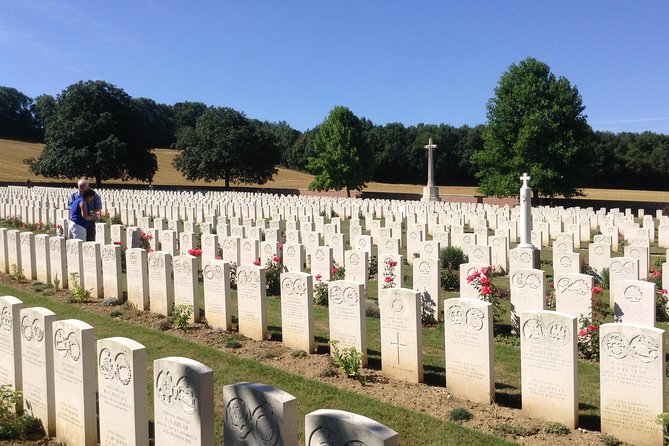
Tyne Cot Cemetery receives about 45 minutes. It is described as the world’s largest Commonwealth War Graves Commission cemetery, with about 12,000 soldiers buried there. Only around 3,000 have known names, and two Australian Victoria Cross recipients are buried at the cemetery.
This is a place where the scale of the war becomes difficult to avoid. The repeated headstones show the number of dead, while the unidentified graves point to how many families never received a complete account of what happened.
Forty-five minutes is enough for a guided introduction and personal reflection, but not enough to read every inscription. If you have a relative buried at Tyne Cot, bring the name and tell Søren in advance. His family-history research is one of the strongest reasons to book a private tour rather than simply arrive by car.
The cemetery is solemn, and the schedule remains full afterward. I would not plan a busy evening immediately after the tour. You may want some quiet time once the day’s stories have settled.
John McCrae and In Flanders Fields
The John McCrae site receives about 30 minutes. You visit the hospital site where Lieutenant Colonel John McCrae composed In Flanders Fields, one of the best-known poems connected with the First World War.
The stop offers a change of scale. After cemeteries and battle positions, the focus shifts to writing and remembrance. The poem has become familiar through ceremonies and commemorations, but seeing the place linked to its composition gives it a more immediate setting.
I appreciate that this stop is included in a day otherwise centered on military movement. War is recorded in orders, maps, graves, and monuments, but also in words. You may find this one of the easier stops for younger members of a group or for anyone less interested in technical battle details.
The Menin Gate and 55,000 Missing Names
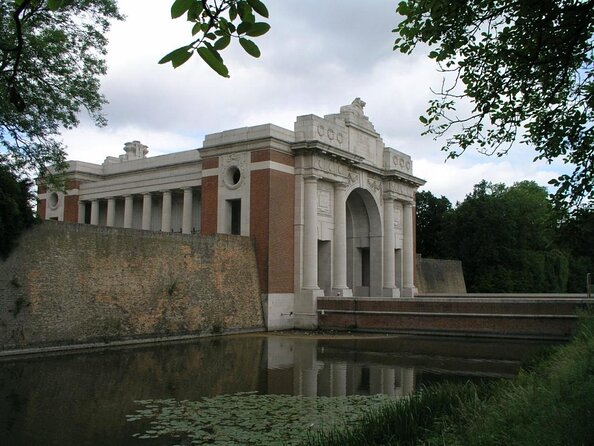
At the Menin Gate, you spend about 20 minutes hearing how the memorial came about and learning about the 55,000 missing names recorded there.
The gate is one of Ypres’s most familiar sights, but it is more meaningful when you understand why those names are present. The memorial is not simply a grand entrance into the city. It addresses the problem of soldiers who had no known grave.
Twenty minutes gives you an introduction, not a full search through the names. If you have a particular relative listed there, provide the details ahead of time. The private format may allow a more personal explanation, although the itinerary still has to keep moving.
This is likely to be one of the busiest-feeling parts of the day because it is in town, rather than out among the fields. I would keep the moment quiet and let the scale of the memorial speak for itself.
Sanctuary Wood’s Original Trenches and Museum
Sanctuary Wood is the final listed stop and lasts about 40 minutes. Admission to the trench museum is included, along with access to original WWI trenches.
This is a strong ending because it brings you close to the physical conditions of the front. Memorials can explain loss and commemoration, but trenches show the cramped, uneven spaces where soldiers lived and fought.
The museum is described as quaint rather than large, so do not expect a major national institution. Its value is in the original material and the direct connection to the ground. After a day spent hearing about attacks and advances, the trenches help you picture the daily reality behind those movements.
The museum is the only included admission specifically listed, while the other stops are free-entry sites. Bottled water is also included. Lunch is not, so you should ask how the day handles the midday break and bring a plan for food.
Timing, Pickup, and Who Will Enjoy It
The tour begins at 9:00 a.m. and lasts about eight hours. Pickup is offered from selected Ieper-based hotels, but the minimum is two people. If you need to begin in Lille, Arras, or Bruges, this particular departure is not the right option, as separate listings are offered for those cities.
The tour is private, meaning only your group participates. That is excellent for relatives researching a soldier, couples with different levels of history knowledge, or families who want to adjust the emphasis. It is less ideal if you prefer a casual hop-on, hop-off style day with plenty of free time.
The tour is offered in English, and service animals are allowed. It is near public transportation, and most people can participate. The supplied information does not promise full step-free access at every stop, so anyone with mobility concerns should ask before booking, especially because the itinerary includes woods and trenches.
The experience is currently rated 4.9 from 29 reviews, with 97 percent recommending it. The repeated praise centers on Søren’s preparation, personal storytelling, clear explanations, and willingness to adapt the day. Several people valued help with family members, including one full account of a great-grandfather from his arrival through the day he died.
That kind of service is not guaranteed as a separate genealogy package, but it is a strong clue about how to get the most from the tour. Send names, units, countries of service, and cemetery details before arrival. The more precise your information, the more useful the conversation can be.
Is $420.49 Per Person Good Value?
The price is high for a day out, especially because lunch is extra. But this is not priced like a basic sightseeing transfer. You are paying for a private vehicle-based route, a full day with a specialist guide, hotel pickup in Ieper, bottled water, and a custom approach.
For someone with no interest in military history, the cost will not feel worthwhile. For a family visiting a relative’s grave, or for two people who want to understand the Ypres battles properly, the private format can save hours of research and avoid a confusing self-drive route.
I would compare the price with the cost of arranging transport, buying maps, finding sites, and trying to understand the sequence alone. You would still need to provide your own interpretation. Here, Søren’s local knowledge and preparation are the main product.
Free cancellation is available up to 24 hours before the start time. Changes or cancellations inside that period are not refunded, and the tour may be canceled if the minimum number of participants is not met. In that case, a different date or experience, or a full refund, is offered.
Should You Book This Ypres Tour?
Book it if you want the human stories behind the battlefields, especially if you have Australian, British, South African, or other family connections to the Ypres area. It is also a strong choice if you want to see the major sites in one day without trying to decode the roads and maps yourself.
Think twice if you dislike cemeteries, long historical explanations, or a tightly packed schedule. The tour covers a lot, and the serious subject matter does not leave much room for sightseeing in the usual relaxed sense.
For most people who come to Ypres specifically for First World War history, I think this is a worthwhile splurge. Send Søren your family names before the day, wear comfortable shoes, and leave room afterward to reflect. The best part is not simply seeing more sites. It is understanding how those sites fit together and why the ground around Ypres still matters.
FAQ
Where does the tour begin?
The tour starts at 9:00 a.m. and offers pickup from selected Ieper-based hotels. A minimum of two guests is required.
Can I start the tour in Lille, Arras, or Bruges?
Not with this specific Ypres-based departure. Separate listings are available for starts in Lille, Arras, or Bruges.
How long does the tour last?
The experience lasts approximately eight hours.
Is this a private tour?
Yes. Only your group participates, and the route can be customized around your interests and knowledge level.
Is lunch included?
No. Lunch is not included in the price.
What is included in the tour?
Bottled water and admission to the trench museum are included. The tour also offers pickup from select Ieper hotels.
New this season around the world
- Washington, DC: Christmas Tree & Holiday Lights Bus Tour★ 4.5 · 4 reviews
- Windsor, Bath, Stonehenge & Salisbury with Christmas Lunch★ 4.3 · 3 reviews
- Wroclaw: Private 1h Christmas River Cruise★ 5.0 · 2 reviews
- Wien: Tour with locals on the trails of the Christmas Tree★ 4.6 · 7 reviews
- Visit the authentic Christmas market in Obernai★ 3.0 · 3 reviews
- Washington DC: Christmas Eve Gourmet Brunch or Dinner Cruise★ 4.2 · 6 reviews
- Zurich’s Enchanted Christmas: A Festive Journey★ 4.5 · 3 reviews
- Christmas Walking Tour in Zürich: Exploring Holiday Charm★ 5.0 · 2 reviews
Private Christmas Tours, compared.

New York City Christmas Lights Private Horse Carriage Ride
Read our review →
Christmas Lights Tour of Madrid in Eco Tuk Tuk Private
Read our review →
Christmas in New York: Private Holiday History Tour
Read our review →
London Christmas Lights Private Tour by Traditional Black Cab
Read our review →
Madrid: Private Christmas Lights Tour by Eco Tuk-Tuk
Read our review →

Private Christmas Tour in Münster including Glühwein
Read our review →Browse the lists this tour appears in